
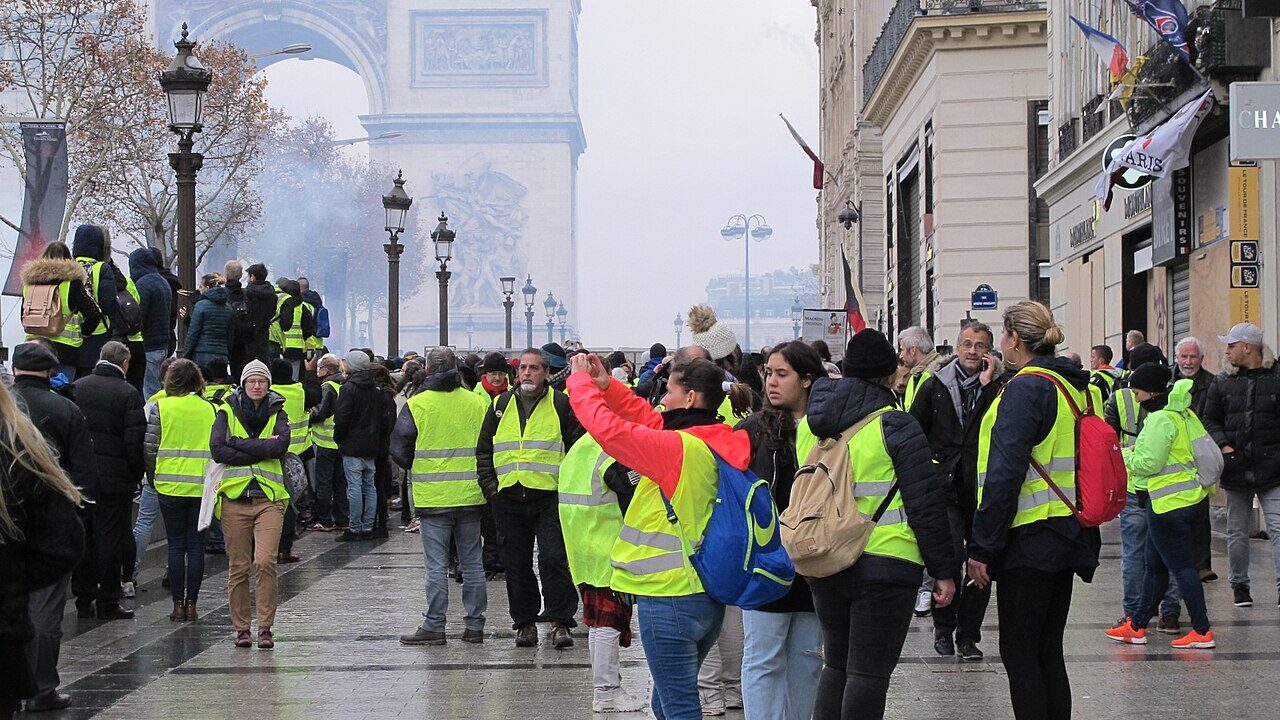
France National Assembly debate on the rioters pay bill will be shaped by a single question that the Senate debate left unanswered: who exactly pays, and for what exactly. The Senate version creates joint liability for people in violent groups, up to 10,000 euros, with recovery through benefit deductions. But it does not, in the form passed by 229 votes to 105, draw a sharp line between a person who broke a window and a person who stood nearby when a window was broken. That line is the Assembly work, and it will determine whether the law survives constitutional challenge.
Constitutional principles at stake are familiar: freedom of assembly, freedom of expression, and the individualisation of penalties. Left wing parties argue that joint liability violates individualisation by making one person pay for another act. Human rights organisations argue that benefit deductions, reaching family allowances, housing aid, minimum income and school allowances, punish households rather than offenders. The government argues that urgency after October 17, when almost 2,500 businesses were damaged and damage approached a billion euros, justifies a broader liability rule, and that the dispersal order test, two police orders before liability for staying, protects peaceful protesters who leave when told.
The Assembly arithmetic makes a simple passage unlikely. No bloc holds a majority, and the bill will face amendments from left, centre and right. The far right, which favoured a 30,000 euro threshold in the Senate debate, may push for higher liability. The left may push to exempt benefits, to require proof of violent participation, or to remove joint liability altogether. The centre, which holds the balance, may seek a compromise: keep liability, but cap deductions, exempt school allowances, and require a court to find actual participation in a violent group, not mere presence.
What a constitutional challenge would test
A constitutional challenge, if the bill passes, would test whether joint financial liability for group violence is a proportionate restriction on assembly, or an excessive one. Courts in France and in Europe have accepted some forms of collective responsibility in public order law, but they have also struck down measures that punish peaceful participants for the acts of others. The Senate report’s acknowledgement that offenders often have little seizable income will be cited by both sides: supporters will say it justifies benefit recovery, critics will say it proves the bill targets the poor because the rich can pay fines directly.
The French Assembly debate on liability will also be shaped by the student concessions announced alongside the bill. Parcoursup replacement by 2028, cancelled teacher cuts, 500 new posts, building funding and a class cap of 28 show that the government can answer protest demands with policy, not only with punishment. An Assembly that passes generous education measures while also passing a harsh liability bill will send a mixed message to the streets. An Assembly that amends liability to protect peaceful protest while keeping recovery from actual rioters will send a clearer one.
The vote to watch
Watch the amendment votes, not only the final vote. The final vote will show whether a majority exists. The amendment votes will show what kind of law that majority supports: a narrow recovery law, a broad deterrence law, or a compromise that tries to be both. French shopkeepers, who need repair money this winter, and France protesters, who need assurance that peaceful demonstration will not cost them their benefits, are both waiting on those amendments. The Assembly debate is therefore not a formality after the Senate vote. It is the debate that decides what the law actually is.