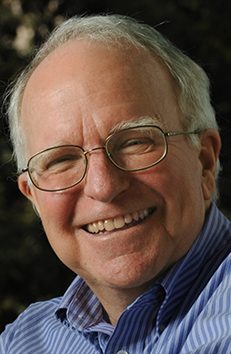
American economists Robert E. Hall and Michael Woodford have won the 2026 Nobel Prize in Economic Sciences for building the ground-up models that central banks and finance ministries now use to stabilize economies against shocks. The Royal Swedish Academy of Sciences announced the award in Stockholm on Monday, honoring what it called the “microeconomic foundations of macroeconomic stabilisation.”
Hall is a senior fellow at Stanford University’s Hoover Institution and professor of economics emeritus; he long chaired the National Bureau of Economic Research committee that officially dates American recessions. Woodford is the John Bates Clark Professor of Economics at Columbia University, whose 2003 book “Interest and Prices” became the standard text for inflation targeting. They share prize money of 12 million Swedish kronor, about $1.2 million — raised by one million kronor this year to mark the Nobel’s 125th anniversary.
Why micro decisions matter for macro policy
The laureates’ key insight was that economies can only be steadied by accounting for the millions of decisions made at a micro level by households and businesses — how families adjust savings based on future expectations, how firms set prices on forecasts — rather than by top-down theories. The “New Keynesian” framework that grew from their work lets policymakers explain and quantify how stabilization policies ripple through the economy.
“With them, we are better equipped to deal with shocks in the economy, such as energy crises or sudden changes in how much households consume,” said John Hassler, chair of the prize committee. The timing is pointed: after the 2022 inflation surge and the energy shock triggered by the war in the Middle East, central banks are once again grappling with exactly the dilemmas Hall and Woodford modeled — including how a central bank’s own communication shapes expectations, a theme of Woodford’s later work.
A prize for the expectations era
The award caps a season of Nobels that has also honored physics and peace, each reflecting a world under strain. For the US, it is a reminder that its universities still produce the frameworks the world borrows in a crisis — even as debates rage over research integrity, like those sham research services flagged by Nature. And in a week when technology firms race to build AI-ready infrastructure, the prize committee’s message was about people, not machines: stabilization works only when policy respects how humans actually decide. Read the Academy’s reasoning via BusinessWorld and NBER.